

“"In Our Mothers' Gardens" Celebrates the Legacy of Black Mothers - Ms. Magazine” plus 1 more |
| "In Our Mothers' Gardens" Celebrates the Legacy of Black Mothers - Ms. Magazine Posted: 05 May 2021 02:59 PM PDT
Black Feminist in Public is a series of conversations between creative Black women and Janell Hobson, a Ms. scholar whose work focuses on the intersections of history, popular culture and representations of women of African descent. In Our Mothers' Gardens, the new documentary by debut filmmaker Shantrelle P. Lewis, from Ava DuVernay's ARRAY films, premieres Friday on the streaming giant Netflix. A deeply personal film exploring the relationships between Black mothers and daughters, Lewis and her close circle of friends, mentors and Black feminists—including women from different regions of the African Diaspora and public figures such as #MeToo founder Tarana Burke and public intellectual Brittney Cooper, among others—gather in the comfort of living rooms to wax poetic about Black motherhood, its joys, struggles and resistance against the forces of anti-Black racism and misogynoir since the era of the transatlantic slave trade.
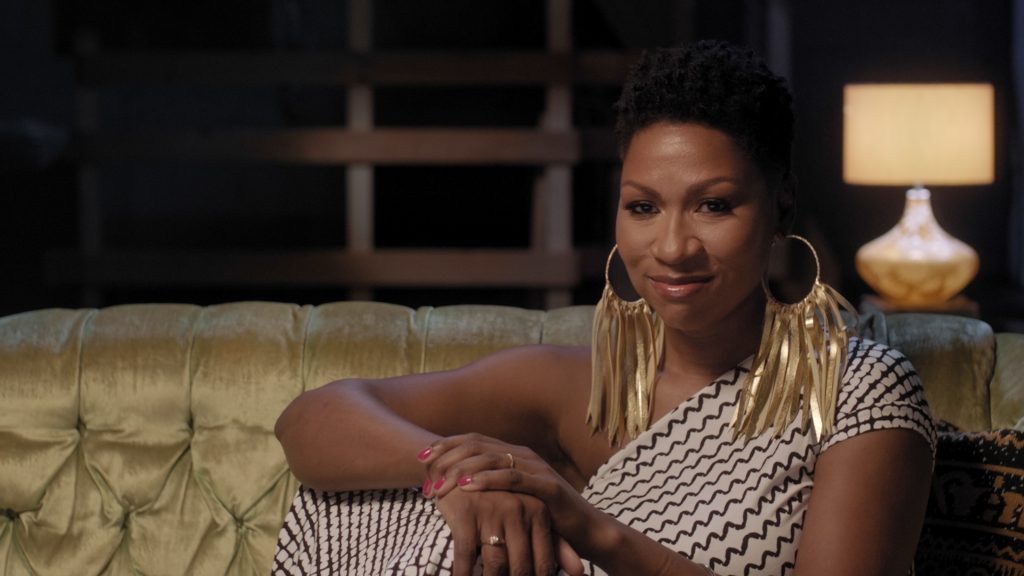
Having authored the book, Dandy Lion: The Black Dandy and Street Style, based on an international traveling exhibition that she curated about Black masculinity and fashion, and relying on her skills as a former museum curator, Lewis reframes old family photographs and her documentary talking heads through a colorful collage on par with a lush and richly layered botanica. As a New Orleans native, Howard University alum, artist, curator, scholar and Yoruba priest, Lewis shrewdly invokes Alice Walker's "mothers' gardens" ahead of the Mother's Day weekend to explore how Black motherhood has survived and thrived intergenerationally. Lewis spoke with Ms. magazine's Janell Hobson for the re-launch of her Black Feminist in Public series. Janell Hobson: First, I want to say, your film is so aesthetically engaging. I love the way all of your film subjects are interviewed in lovely parlor settings, so we get a very intimate sense as if we're having a private conversation.
Hobson: It's fitting, as is the metaphor of "our mothers' gardens," as some of the film subjects also appear in garden settings. You also begin the film with a quote from Alice Walker.
Hobson: How did you come to choose film as the means to continue this conversation, this storytelling?
Hobson: What is intriguing about your film is the way you bring in different modes of storytelling: the oral, the visual, and now the documentary experience. Do you believe we're experiencing a renaissance in Black filmmaking?
Here at Ms., our team is continuing to report through this global health crisis—doing what we can to keep you informed and up-to-date on some of the most underreported issues of this pandemic. We ask that you consider supporting our work to bring you substantive, unique reporting—we can't do it without you. Support our independent reporting and truth-telling for as little as $5 per month. Hobson: How did you come to work on this film?
Hobson: It's interesting you say that because more and more women of African descent are leaving behind their Christian faith and rediscovering traditional African religions. That also gets represented in popular culture if we think of Beyoncé's Lemonade. What are your thoughts on these developments?
Hobson: In mentioning Lemonade and Daughters of the Dust, were either of these influential to your own filmmaking?
Hobson: What do you think your film is doing differently that we don't often see in films about Black mothers and daughters?
Hobson: What advice would you give to someone wanting to make a Black feminist film?
Up next: The coronavirus pandemic and the response by federal, state and local authorities is fast-moving. During this time, Ms. is keeping a focus on aspects of the crisis—especially as it impacts women and their families—often not reported by mainstream media. If you found this article helpful, please consider supporting our independent reporting and truth-telling for as little as $5 per month. |
| Five Films Made By Black Women To Stream Before Women’s History Month Ends - MadameNoire Posted: 29 Mar 2021 12:00 AM PDT  There is something to be said about a woman's eye. Our intuition, our sensibilities, our attention to detail and our nurturing ability to get to the heart of the matter all lend themselves as admirable and irreplaceable traits in the world of filmmaking. This is noted in the many projects from women creatives, directors and producers that have won us over and also earned a special place in the culture. As Women's History Month prepares to close and we keep the celebration going past March, I wanted to take some time to honor the women who've been behind some very important films that are available for you to stream now. Here are just a few that left an indelible mark on me. A Wrinkle In Time (Ava DuVernay) on Disney+I'm beginning with this film in particular because I don't feel it was celebrated nearly as much as it deserved upon release. When it was announced that Black Panther and A Wrinkle In Time were debuting around the same time, it felt epic. Ava DuVernay's significant budget of $103 million was the first for a Black woman director, and she was adapting such a classic and essential piece of literature while casting the main character as a biracial Black girl. There were so many things to be proud of and much of that was overshadowed by critiques of the film's action sequences, script and various details. When I finally saw the movie for myself, I was blown away and highly disappointed that I even glimpsed at reviews. It was such a powerful story shown so beautifully. Seeing all of the special effects and fantasy elements that DuVernay got to play around with made me really proud and happy to see more action, adventure and fantasy films directed by women. I also enjoyed the sisterhood between DuVernay, Oprah and star Storm Reid when promoting the film. This one definitely goes down in history for women in film. Beyond the Lights (Gina Prince-Bythewood) on Amazon Prime VideoMost people know Gina Prince-Bythewood as the director of Love & Basketball. She applied that same touch to Beyond The Lights, which is one of my favorite films by any director, man or woman. It has the same romantic awareness and tension from the former film. How far are you willing to go, how much are you willing to sacrifice, for true love? The story answers that question in a way that feels wholly and authentically genuine from a woman's point of view. The film reveals both the prowess and vulnerability that a woman in the limelight possesses, and entertains the idea of Prince Charming having to do more with a gentle soul and security than intimidatingly good looks and wealth. Gugu Mbatha-Raw's portrayal is raw and relatable and she shines gorgeously. Beyond a dope storyline is chic cinematography, meaningful scenery, and beautiful moments that make for a memorable film that to this day still feels like one of a kind. Eve's Bayou (Kasi Lemmons) on Amazon Prime VideoWhen you watch this film in the present, there is so much more to see and learn from it. The dialogue, the esoteric storyline, the lush Louisiana setting and those unforgettable, complex, soulful characters all make for a classic. Jurnee Smollett's portrayal was filled with both innocence and power, even as a young girl. Her acting was electric, as was Meagan Good's, who reminded me of the delicate balance between adolescence and womanhood and how often that is rushed or even abused when it comes to young Black girls. It was a monumental movie for Black women and Kasi Lemmons depicted how our many relationships come into play in our personal histories and decision-making. The unseen elements of the divine are also felt, which is a nod to the director for knowing how to work with both the spoken and unspoken truths, within a script. Just Another Girl on the I.R.T. (Leslie Harris) on Amazon Prime Video and Google PlayThis is one of the definitive films of my teenage years. As an upstate girl, I lived vicariously through Ariyan A. Johnson's character Chantel, her Black and Brown friends, and their fly NYC adventures. There's a scene where they're hanging out all day and run up in the corner store that fills me with so much nostalgia every time I see it. From the outfits to the slang to the raw conversations, the teenage pregnancy storyline and her boldly using money meant for an abortion to take her friends shopping, it was the Flyy Girl or Coldest Winter Ever of films for me. The fact that it was directed by a woman, Leslie Harris, just makes so much sense. The storyline and the small intricacies of being a Black teen and emerging young woman in the '90s were captured perfectly. It's definitely a cult classic. Lemonade (Beyoncé Knowles-Carter) on TidalBeyoncé stopped the world with Lemonade. From its sudden announcement to its rollout, we were already intrigued and expecting something as fierce and wonderful as her eponymous surprise album. What we got was even more powerful and timeless. Beyoncé as director (among a few notable others) just makes sense, as shown through her various documentaries and music videos. Lemonade elevated her even higher as a filmmaker. Snubbed by numerous award shows, it's a film that is pure art and emotion and ancestry and poetry in all of its Black woman glory. The film, with it's ode to Black women in all shapes, sizes, shades and historical relevance, also paved the way for Black Is King, which debuted on Disney+ and evolved the storytelling of family, history and healing that began with Lemonade, taking us even deeper into the roots of Africa, love and what it really means to be a woman of color, essence and vibrancy. These are just a few films by women directors that I absolutely love. What are some of yours? |
| You are subscribed to email updates from "lemonade film,lemonade movie,movies beyonce acted in" - Google News. To stop receiving these emails, you may unsubscribe now. | Email delivery powered by Google |
| Google, 1600 Amphitheatre Parkway, Mountain View, CA 94043, United States | |





0 Yorumlar